Innovation & Technology
Be Found Where It Matters: The Power of Setting Up Your Google Business Profile
AI content creation has transformed how businesses approach content marketing. From generating blog outlines and keyword ideas to producing first drafts in seconds, AI enables organizations to produce content more efficiently than ever before. As AI in content creation becomes increasingly mainstream, however, greater content output does not automatically translate into greater search visibility.
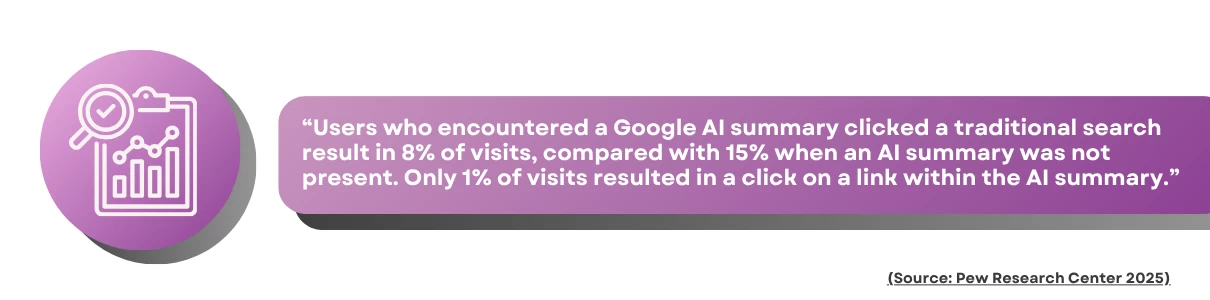
For businesses, this means SEO can no longer focus solely on producing more pages. Content must be discoverable, useful, trustworthy, and supported by a strong technical and strategic foundation.
This makes AI SEO services, AI content optimization, and SEO content development increasingly interconnected. AI can accelerate research, ideation, content creation, and optimization—but sustainable search visibility still depends on strategy, expertise, technical SEO, and content that genuinely helps users.
Key Takeaways
- AI can accelerate content production, but it cannot replace SEO strategy.
- AI search is changing how people discover and interact with information.
- Effective AI content creation should incorporate human expertise, first-party data, and original insights.
- AI content optimization should prioritize relevance and usefulness rather than keyword repetition.
- Technical SEO, website structure, internal linking, and authority remain important in AI-driven search.
- The strongest AI-powered SEO strategies combine automation with human judgment and expertise.
The Rise of AI Search Is Changing How People Find Information
For years, businesses focused on ranking for keywords. Today, AI search is changing how people discover information by generating direct, summarized answers from multiple sources.
While traditional SEO fundamentals still matter, businesses must shift from:
“What keyword should we rank for?” to “What information does our audience need?”
This is the foundation of modern AI SEO, where search intent, expertise, and genuinely valuable content matter most.
AI SEO Is About More Than Generating Articles
The rise of AI SEO may suggest that AI can automate optimization—but it cannot. AI powered SEO can support keyword research, competitor analysis, content optimization, technical audits, and reporting, while SEO professionals must still validate information, understand search intent, and align strategies with business goals.
Effective AI SEO connects:
Audience Research → Search Intent → Content Strategy → AI-Assisted Production → Optimization → Technical SEO → Authority → Measurement.
AI can accelerate the process, but strategy remains essential.
Search Intent Should Drive SEO Content Development
Modern searches are becoming more conversational and specific. Someone searching “AI SEO” has a different intent from someone asking, “How can AI improve SEO for a small business?”
This is why SEO content development should focus on what users are trying to accomplish—not just the keywords they use.
Consider the user's questions, needs, journey, and preferred content format, then create content that provides the most relevant answer.
Search intent should guide content—not search volume alone.
Technical SEO Still Matters in an AI-Driven Search Environment
AI does not replace technical SEO.
Even strong content can struggle to perform if search engines cannot properly crawl, index, or understand a website. Businesses should maintain a solid foundation across site architecture, indexing, internal linking, structured data, page performance, and crawlability.
Better content still needs a technically sound website behind it.
AI Search Algorithms Are Changing the Visibility Game
The rise of AI search also changes what businesses should consider a successful SEO outcome.
Traditionally, SEO success was often summarized as:
Rank #1 → Get the Click → Generate Traffic
But AI-powered search experiences can provide answers directly within the search interface.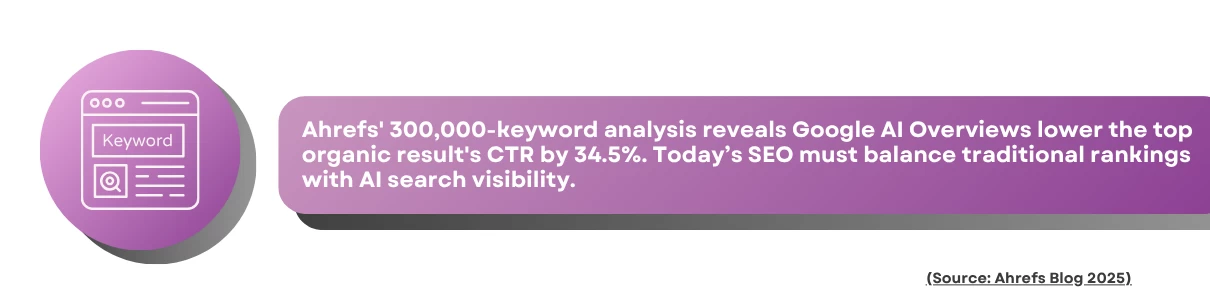
This does not mean traditional SEO is becoming irrelevant.
In fact, Google explicitly states that established SEO practices remain foundational to visibility in its generative AI search experiences.
Instead, it means businesses need to think about visibility more broadly.
A strong strategy should consider:
- Traditional organic rankings
- AI Overview visibility
- Brand mentions
- Citations
- Featured results
- Long-tail searches
- Branded searches
- Conversion-focused queries
The goal is no longer simply to occupy one position on one search results page. It is to establish a strong presence across the evolving search journey.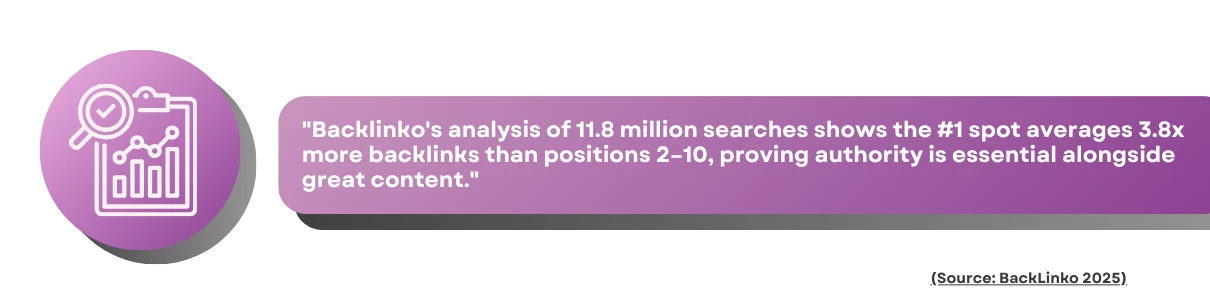
Authority Still Plays an Important Role
Strong content also needs credibility. Businesses can build authority through original research, expert commentary, case studies, thought leadership, digital PR, and data-driven content.
AI can support these activities, but authority ultimately comes from information people consider valuable and trustworthy.
As generic content becomes easier to produce, first-hand expertise and original insights become even more important.
The Future of SEO Is AI-Assisted, Not AI-Dependent
AI is becoming increasingly integrated into marketing workflows and becoming a standard in B2B Marketing.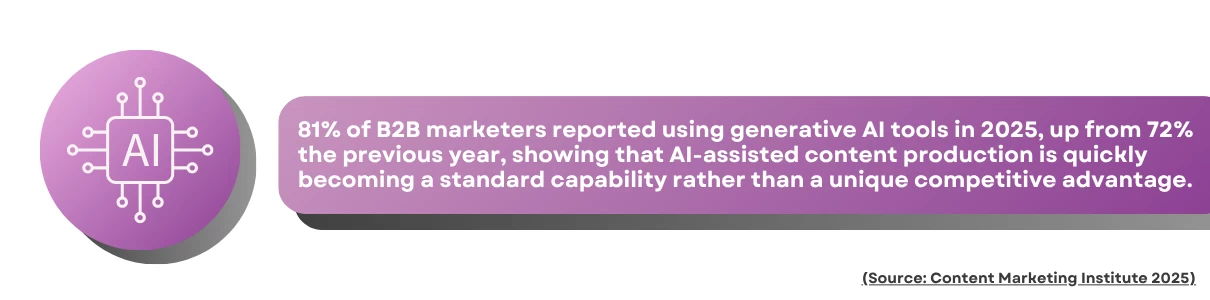
But the same research reveals an important distinction: only 19% said AI was integrated into their daily processes and workflows, while 54% described their approach as ad hoc experimentation.
This suggests that simply having access to AI is not the competitive advantage.
Knowing how to integrate it into a repeatable process is.
For SEO teams, that could mean creating a standardized workflow where AI supports: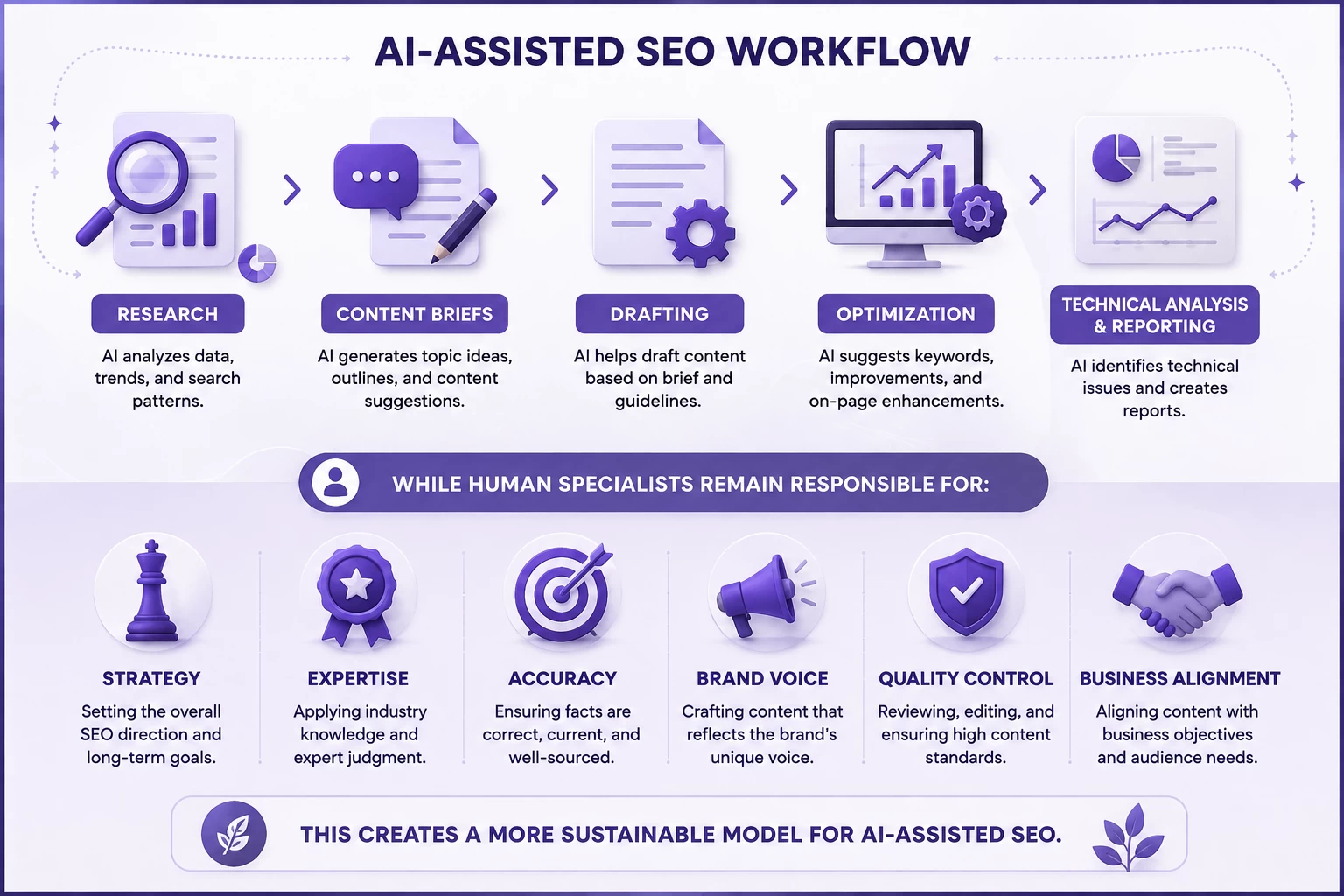
Building a Stronger AI SEO Strategy
Businesses can turn AI content into stronger search visibility by following seven steps:
1. Understand Your Audience
Research the questions, language, and problems your customers actually use.
2. Map Search Intent
Understand whether users are researching, comparing, evaluating, or ready to act.
3. Use AI for Efficiency
Apply AI to research, ideation, content briefs, analysis, and repetitive tasks.
4. Add Human Expertise
Incorporate original insights, industry knowledge, customer experiences, and first-party data.
5. Strengthen Technical SEO
Ensure search engines can efficiently crawl, index, and understand your website.
6. Build Authority
Create research, resources, case studies, and thought leadership that demonstrate expertise and earn credible references.
7. Measure Business Outcomes
Track rankings and AI search visibility alongside traffic, leads, conversions, and revenue.
The goal isn't to produce more content. It's to build an SEO system that combines AI, expertise, and strategy to create measurable business results.
Why AI Content Creation Alone Is Not Enough
AI content creation makes it easier to produce outlines, drafts, research summaries, and content ideas. But more content does not necessarily mean better search visibility.
Google allows the use of generative AI, but content created at scale without adding value can violate its scaled content abuse policies.
Effective AI in content creation should therefore combine AI efficiency with original insights, accuracy, expertise, and genuine value.
Final Thoughts
AI can help your business create content faster—but turning that content into meaningful search visibility requires the right strategy, execution, and continuous optimization.
At PurpleBug, we combine digital marketing strategy, technology, content, media, and data analytics to help businesses strengthen their online presence and connect with the right audiences. Our Agency offers Omni-Channel Media and Searchability Solutions, alongside other integrated digital marketing solutions designed around measurable business objectives.
Whether you're looking to improve SEO content development, strengthen your visibility in AI search, or explore professional AI SEO services, the goal remains the same: helping your business get found, earn trust, and generate meaningful results.
Ready to build a stronger search strategy?
Talk to an Expert and let's turn your digital presence into a stronger growth engine.