Digital Marketing
5 Critical Influencer Marketing Mistakes Brands Make (And How to Drive Real Business Impact)
In the Philippines, influencer marketing is now a direct commerce engine rather than a top-of-funnel experiment. 54% of Filipino consumers buy products directly recommended by creators, leading local brands to allocate up to half of their digital ad spend to creator campaigns (Statista Research Department, 2025). As organizations scale their influencer marketing in the Philippines, creator activations have become a fundamental pillar of modern content marketing services.
Yet significant operational vulnerabilities remain. Roughly two-thirds of brands still prioritize follower count over verified engagement or conversion data, leaving ad spend exposed to both inflation and low ROI. At the same time, full regulatory enforcement under the Internet Transactions Act (RA 11967) and stricter oversight from the Department of Trade and Industry (DTI) and Ad Standards Council (ASC) have made non-compliant endorsements a severe legal liability, carrying fines of up to ₱1,000,000.
Grounded in local consumer data and advertising standards, this guide breaks down five critical misconceptions Philippine brands must overcome—and the frameworks needed to turn creator collaborations into compliant, high-return business drivers.
Key Takeaways:
-
Prioritize Resonance Over Reach: Creator size alone doesn’t determine performance. Consider audience relevance, engagement, credibility, and campaign objectives—not just follower count.
-
Define Business KPIs Upfront: Tie campaigns to measurable goals like traffic, qualified leads, CAC, and sales lift.
-
Balance Guardrails with Creative Freedom: Set clear guidelines, but let creators deliver content authentically.
-
Treat Publishing as Phase One: Extend content value through moderation, paid amplification, and repurposing.
-
Enforce Joint Regulatory Compliance: Ensure brands and creators follow clear disclosure and compliance standards.
1. The Follower Count Fallacy: Why Reach Does Not Equal Resonance
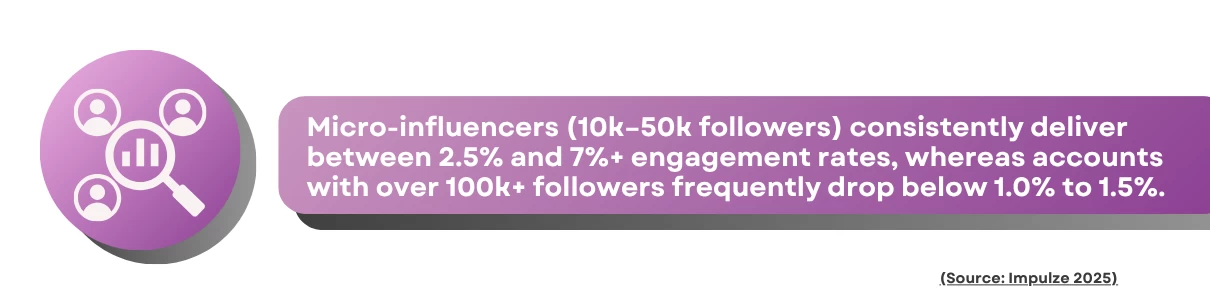
A frequent mistake in media planning is equating follower volume with prospective buyer intent. Large creator followings often project the illusion of massive market penetration, yet broad reach rarely converts efficiently into qualified pipeline.
Audience trust and active engagement typically compress as creator account sizes scale upward. Dedicated, tightly focused creator communities yield higher conversion intent because the creator-to-follower relationship is anchored in direct engagement, niche authority, and domain alignment. Sophisticated growth leaders evaluate audience concentration and content relevance rather than top-line follower tallies, embracing data-driven influencer marketing to guide their investments.
Evaluating Creator Quality Beyond Follower Counts
Before allocating budget to top-tier accounts, audit creator profiles using technical and qualitative filters:
-
Audience-to-ICP Alignment: Verify that the creator's follower demographic and geographic distribution match your target Ideal Customer Profile (ICP).
-
Engagement Authenticity: Inspect comment feeds to distinguish genuine conversational interactions from automated bot networks, reciprocal comment pods, and generic emojis.
-
Category Affinity: Assess whether your product category naturally complements the creator's existing organic content pillars.
-
Commercial Saturation: Review posting cadence to confirm the creator does not feature competing sponsors or excessive brand promotions that erode message recall.
2. The Vanity Metric Trap: Treating Creator Campaigns as Mere Brand Views
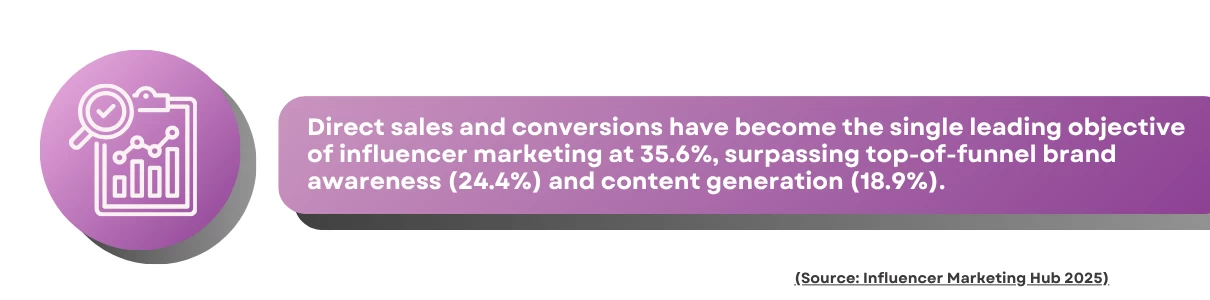
Impressions and views confirm that an asset is rendered across a feed, but they fail to prove commercial intent or customer action. Treating creator marketing purely as an awareness vehicle makes attribution difficult for finance teams evaluating channel ROI.
Industry benchmarks demonstrate that brands operating without concrete performance frameworks struggle to defend creator budgets against paid search and performance display. Whether running a consumer promotion or a specialized B2B influencer marketing initiative, a creator collaboration must function as an accountable performance channel where every dollar correlates with measurable customer movement across the funnel.
Aligning Campaign Objectives with Commercial KPIs
Every campaign brief must link creative deliverables to unambiguous business milestones across the entire brand marketing campaign:
-
Top-of-Funnel (Qualified Awareness): Track qualified view completion rates (VCR), brand search lift, active comment sentiment, and target audience penetration.
-
Middle-of-Funnel (Consideration & Intent): Monitor qualified landing page click-through rates (CTR), link saves, product page dwell time, and branded search query expansion.
-
Bottom-of-Funnel (Direct Conversion): Attribute outcomes using unique checkout redemption codes, platform affiliate links, new customer acquisition rates, and 90-day retention metrics.
3. The Scripting Trap: Over-Controlling the Creative Narrative
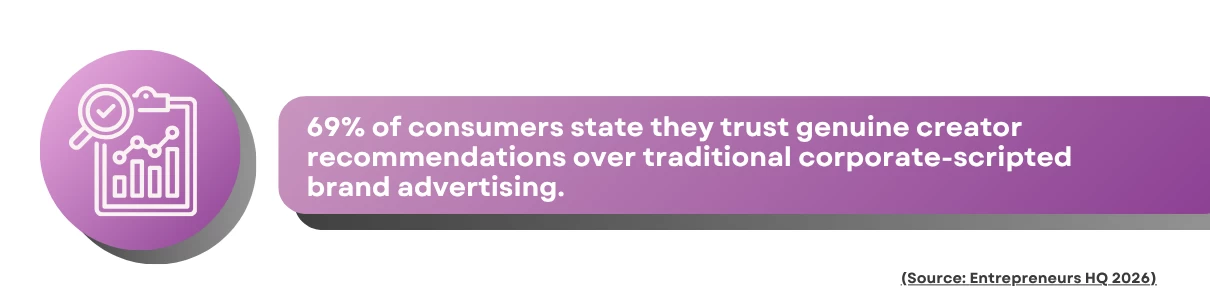
Brand safety and claim substantiation are vital, yet forcing creators to recite rigid, word-for-word corporate copy destroys the primary reason creator marketing works: authentic third-party validation. Audiences immediately recognize synthetic endorsements, and overt commercial reads trigger rapid drop-offs in viewer retention.
Creators understand the specific pacing, tone, and visual hooks that maintain their audience's attention. Instead of supplying rigid scripts, successful brand teams establish structured creative briefs that safeguard compliance while granting creators the freedom to present the value proposition naturally through compelling interactive content development.
How to Build a High-Performing Creator Brief
-
Mandate Non-Negotiable Core Claims: Highlight two to three primary product differentiators, explicit regulatory guardrails, and required visual proof points.
-
Define "Do's and Don'ts": Clearly outline restricted terminology, competitor restrictions, and mandatory product handling rules.
-
Encourage Personal Integration: Invite creators to illustrate how the solution solves a real friction point in their personal routines or professional workflows.
-
Staged Approvals: Implement a concept-review milestone (such as a story outline or hook pitch) before final video asset production to prevent misalignments early.
4. The "Post-and-Ghost" Mistake: Thinking Execution Ends at Publication
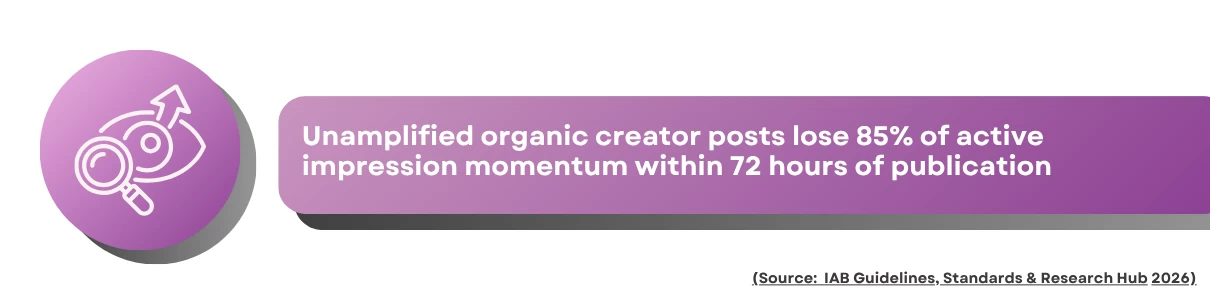
One of the costliest workflow errors is assuming an influencer campaign is complete once the post goes live. In a modern performance framework, publication represents the start of asset monetization and audience engagement.
Organic reach remains subject to platform algorithms. Leaving high-performing content strictly to organic distribution leaves substantial conversion potential untapped. Furthermore, unmonitored comment sections can quickly gather unaddressed customer support inquiries or product skepticism, eroding campaign efficacy.
Maximizing ROI Beyond the Live Date
-
Active Community Management: Supervise comment threads during the first 48 hours to address purchase-intent questions, clarify product usage, and mitigate misinformation.
-
Paid Media Amplification (Whitelisting): Secure creator partnership permissions to run targeted paid media behind top-performing organic assets, extending audience reach and conversion efficiency.
-
Omnichannel Content Repurposing: Contract usage rights upfront to deploy high-converting creator-generated content across email nurture flows, conversion landing pages, and retargeting ads.
-
Comprehensive Post-Campaign Attribution: Measure conversion lift against historical baseline sales, quantifying true customer acquisition costs across the full sales cycle.
5. Compliance Neglect: Treating Disclosures as Exclusively the Creator's Responsibility
A critical legal vulnerability is assuming disclosure obligations fall solely upon the influencer. Regulatory authorities—such as the FTC globally and local consumer protection agencies—explicitly hold both the commercial advertiser and the creator liable for deceptive, undisclosed endorsements.
Relying on vague hashtags or hoping creators remember to tag a post creates severe regulatory exposure, reputational damage, and loss of consumer trust. Transparent disclosures do not suppress conversion metrics; rather, clear affiliations reinforce brand integrity and demonstrate institutional accountability.
Mandatory Standards for Endorsement Compliance
-
Unambiguous, Prominent Language: Require explicit commercial markers (such as #ad or #sponsored) placed at the very beginning of text captions—before "more" truncate links—rather than hidden within trailing hashtag strings.
-
Dual-Layered Labeling: Mandate that creators employ built-in platform paid partnership tags in conjunction with manual, clear written disclosures.
-
Multi-Sensory Visibility in Video: In short-form and long-form video, ensure disclosures appear visibly on-screen with sufficient contrast and duration, alongside an audible verbal mention during the spoken delivery.
-
Documented Compliance Protocols: Maintain an auditable review record showing pre-approval verification and real-time live monitoring of all partner assets.
-
Transforming Creator Collaboration into a Predictable Growth Channel
Executing successful creator campaigns requires bridging creator relations with broader social media management services and holistic promo marketing strategies. Managing discovery, creative alignment, compliance enforcement, and cross-channel attribution demands purpose-built operational infrastructure. Approaching creator marketing through an accountable, analytical framework replaces guesswork with sustainable acquisition efficiency.
Rather than trying to build this specialized operational muscle entirely in-house, leading brands often partner with proven content marketing agencies in the Philippines that offer integrated social media management agency Philippines solutions.
PurpleBug helps enterprises solve these operational bottlenecks by providing high-impact influencer marketing agency services designed for tangible business outcomes across every 360 degree marketing campaign:
-
KPI-Driven Strategy & Execution: Aligning creator selection, campaign timing, and content formats directly with bottom-line enterprise milestones through comprehensive end to end campaign management.
-
Extensive Regional Reach: Delivering targeted influencer marketing services across an audited network of over 10,000 vetted creators across 12 geographic regions and diverse vertical segments for robust influencer marketing philippines activations.
-
High-Trust Nano and Micro Activations: Identifying and securing specialized influencer partnership opportunities that produce genuine community affinity and higher engagement quality.
-
Full-Lifecycle Campaign Governance: Providing turnkey influencer marketing management—handling contracting, usage licensing, structured pre-flight approvals, and rigorous compliance checks from discovery to post-campaign debriefs.
-
Real-Time Dashboards & Performance Tracking: Deploying live measurement dashboards covering sentiment tracking, engagement quality, audience fraud filtering, and agile flight optimization.
-
Conversion-Oriented Reporting: Delivering transparent post-campaign analytics that isolate true ROI, CAC benchmarks, and incremental conversion
lift.
Final Thoughts
As a premier digital marketing agency specializing in content marketing services in the Philippines, PurpleBug combines creative storytelling with data-driven strategy. Through compliant creator partnerships, strategic alignment, and transparent tracking, brands can turn influencer marketing into a measurable, repeatable growth engine.
With the comprehensive Multi-Platform Campaigns & Promo Solutions and KPI-Based Influencer Marketing Solutions learn how they can elevate your next campaign.
Have questions or want to get started? Talk to our experts and reach out to turn your tech-driven unified strategy into multiplied results.